
What Makes Caviar “Imperial”?
The Story, Standards, and Rarity Behind the World’s Most Prestigious Grade**
The word Imperial carries a kind of softness and gravity all its own. It evokes history, richness, and the quiet power of something rare. Say it aloud and images appear almost instantly: gilded palaces, candlelit banquets, crystal bowls being carried across long tables, and the clink of fine silver as royalty tastes a delicacy chosen only for them. In the world of caviar, “Imperial” is not just a poetic flourish or a branding decision—it is a title with lineage, structure, and meaning. It signifies a tier of excellence that only a fraction of Osetra caviar ever achieves.
But what exactly makes caviar Imperial? Why is the Imperial grade held in such esteem, and what separates it from traditional Osetra or premium caviar? Why do certain pearls rise to the top, earning a classification that has existed since the days of emperors? And how does this ancient standard translate into modern aquaculture today?
To understand Imperial caviar, you have to understand not only the pearl itself but the world around it—the history, the craftsmanship, the slow maturation of the sturgeon, and the meticulous grading that determines which roe is worthy of wearing the crown. This is a story about rarity. About taste. About patience. And ultimately, about why Imperial remains one of the most coveted grades in the world of caviar.
A Title Born From Royalty: The Historical Legacy of “Imperial”
Centuries before modern aquaculture refined the art of sturgeon farming, caviar existed as a precious and unpredictable treasure. In Russia and Persia—two of the earliest civilizations to elevate caviar to a delicacy—the term “Imperial” was used with true intention. Only the highest-quality roe from the largest, most mature sturgeon was reserved for emperors, tsars, and royal guests.
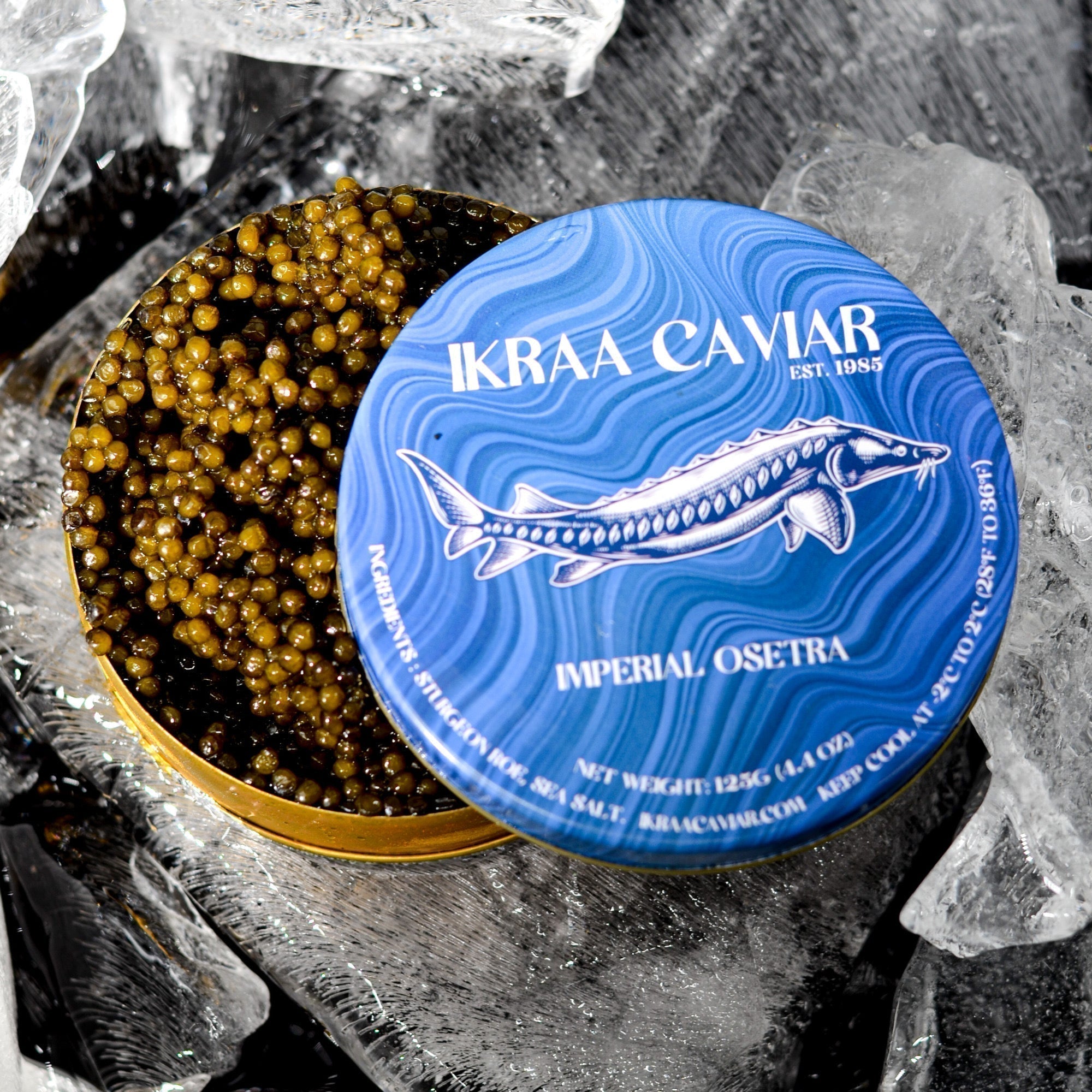
These selections were extraordinary. They often displayed naturally golden or amber hues, a rarity that occurred only in a small percentage of mature fish. Because sturgeon grow slowly and only produce roe after many years, the golden pearls were considered both a visual marvel and a sign of exceptional maturity. This rarity gave birth to the tradition: golden, large, perfectly textured roe became known as Imperial.
The term was not about marketing or romance; it was about hierarchy and exclusivity. Royal courts demanded only the finest expressions of caviar—the roe that was visually striking, texturally flawless, and rich in flavor. Anything less was never considered Imperial.
This heritage still lives within the designation today. When modern producers apply the Imperial label, they are honoring a centuries-old tradition tied to excellence and scarcity.
Imperial Caviar in Modern Aquaculture: Keeping a Tradition Alive
Today’s aquaculture industry is far more controlled than the wild sturgeon fisheries of the past. Temperature, environment, feeding, and water purity are all meticulously regulated. But even with improved consistency, Imperial-grade caviar remains extremely rare.
Why? Because the factors that determine the Imperial classification—color, size, aroma, texture, maturity, and flavor—still depend heavily on nature. Even among carefully raised Osetra sturgeon, only a small minority produce roe that meets the standard.
Modern producers, especially luxury houses like IKRAA, maintain the Imperial tradition by selecting only the very finest harvests. It’s a combination of art and science: part intuition, part technique, and part surrender to nature’s unpredictability. The Imperial label isn’t assigned lightly or frequently. It’s earned through a process of strict grading—something that cannot be taught as much as it is developed through years of experience.
The Visual Signature of Imperial Caviar: Golden Hues and Luminous Pearls
One of the first signs that roe may qualify as Imperial is its color. While not always golden, Imperial-grade caviar often exhibits a palette distinct from standard Osetra. Colors may include:
-
Pale silver
-
Light grey
-
Warm olive
-
Deep amber
-
Golden tones
These hues are not dyed, altered, or manipulated. They arise naturally from the age of the sturgeon, genetics, diet, and environmental conditions. Mature sturgeon—those producing roe after many years—are more likely to display these uncommon tones.
Color is only the beginning. Imperial pearls are generally larger and more uniform, with a glowing sheen that catches the light beautifully. When you tilt the tin, the pearls move cohesively, each glistening with a surface tension that signals freshness and high oil content.
The visual appeal of Imperial caviar contributes significantly to its luxury. It’s not just about taste; it’s about the sensory experience of opening the tin and seeing something extraordinary.
Texture That Sets Imperial Apart: The Signature Pop of Perfection
The true hallmark of Imperial caviar is its texture. A perfect pearl should be firm enough to hold its shape yet delicate enough to melt once gently pressed against the palate. When the membrane breaks, it should release its oils with a soft pop—not too abrupt, not too faint.
Imperial caviar typically has:
-
Larger, more mature pearls with excellent structural integrity
-
A smooth, velvety membrane that yields effortlessly
-
A clean, refined pop that signals ideal freshness
-
A satin-like finish that coats the palate without heaviness
Texture is one of the hardest qualities to achieve consistently, which is partly why so little roe makes it into the Imperial category. Even with perfect farming conditions, the sturgeon must be at the right stage in its cycle, and the roe must be harvested and handled with precision.
Texture is the soul of caviar, and Imperial caviar embodies that truth more clearly than any other grade.
A Flavor Profile Worthy of the Name
The flavor of Imperial caviar is where the designation fully justifies itself. A single spoonful delivers a sequence of layered, elegant notes, each unfolding gently:
1. The First Impression
A clean, oceanic delicacy—not saltiness, but freshness. The initial flavor should feel pure, cool, and effortless.
2. The Mid-Palate
This is where Imperial truly shines. Expect luxurious richness:
-
buttery depth
-
toasted nuttiness
-
soft creaminess
-
subtle sweetness
-
delicate brine
These flavors should never fight for attention; they should flow together with harmony and restraint.
3. The Finish
The finish of Imperial caviar is long, refined, and mineral-driven. It lingers, not heavily but gracefully, inviting the next taste without overwhelming the palate.
If the essence of caviar is elegance, Imperial caviar is its most eloquent expression.
Grading: How Experts Select Imperial Caviar
Not all caviar is created equal, and not all Osetra caviar becomes Imperial. When IKRAA’s graders evaluate a harvest, they consider dozens of factors—not only the appearance and size but how the roe responds to touch, how the pearls separate, how they settle in the tin, and how their aromatics behave at different stages of opening.
Only about 5% of total production typically qualifies. This selectiveness is not about exclusivity for the sake of prestige—it is a necessary consequence of the standards. Imperial caviar must excel in every category:
-
Color: consistent, bright, rare
-
Size: larger-than-average pearls
-
Firmness: no mushiness, no ruptured membranes
-
Aroma: clean, subtle, never fishy
-
Flavor: complex, elegant, balanced
-
Texture: refined pop, silky release
-
Uniformity: no variation in pearl structure
Every tin of IKRAA Imperial Osetra is hand-packed and hand-graded. Machines cannot determine quality at this level; only trained professionals with years of sensory experience can identify true Imperial.
What Makes Imperial Caviar So Rare?
Rarity is a combination of nature, time, and human skill. Even under optimal conditions, only a fraction of sturgeon produce roe that meets Imperial standards. Factors that contribute to scarcity include:
-
Sturgeon maturity: Older sturgeon produce more complex roe—but not always the right color or size.
-
Genetic variation: Only certain fish carry the genetic traits for golden or amber hues.
-
Environmental subtlety: Slight differences in water temperature or salinity affect oil composition.
-
Harvest timing: If the roe is even slightly past peak, it loses its firmness and sheen.
-
Expert evaluation: Only the strictest grading ensures that Imperial remains authentic.
This is why Imperial caviar commands a higher price and carries a deeper sense of luxury: you’re not just paying for taste—you’re paying for time, rarity, and mastery.
Imperial as a Modern-Day Status Symbol
While Imperial caviar was once reserved exclusively for emperors and tsars, it now exists as a symbol of discerning taste rather than inherited power. Today, people choose Imperial Osetra because they value purity, authenticity, rarity, and craftsmanship. They choose it for milestone celebrations, for gifts that carry emotional weight, for tables where food is meant not just to feed, but to elevate.
Imperial caviar is not purchased casually—it’s chosen thoughtfully, with an understanding that it represents the best of the best.
In a world filled with trends, Imperial remains timeless.
Imperial Caviar at IKRAA: A Legacy Preserved
IKRAA’s Imperial Osetra honors every part of the tradition: the history, the rarity, the rigorous standards, and the sensory experience. Each tin represents the pinnacle of what Osetra caviar can be—hand-selected, elegantly textured, and unmistakably refined.
When you choose IKRAA Imperial Osetra, you’re not simply buying caviar; you’re bringing home a piece of culinary heritage.
It’s a taste that has traveled through centuries. A flavor once reserved for royalty. And an experience that remains unforgettable.
Experience the Caviar Once Reserved for Royalty
Explore IKRAA Imperial Osetra Caviar—rare, hand-selected, and extraordinary in every detail.