
How to Travel With Caviar: The Complete Luxury Guide to Transporting IKRAA’s Finest Worldwid
Caviar is one of the world’s most cherished delicacies, and part of its magic is found not only in tasting it, but in sharing it. People bring caviar to private dinners, intimate celebrations, vacation homes, yachts, ski chalets, international gatherings, and holiday tables around the world. And while serving caviar is an art, traveling with caviar is a science—one that blends precision, temperature control, and an understanding of how fragile these pearls truly are.
Whether you’re driving across town, boarding a commercial flight, loading a cooler into the back of an SUV, stepping onto a private jet, or arranging transport across borders, the goal is always the same: your caviar must arrive as perfect as when it left your hands.
This guide walks you through everything you need to know about transporting premium caviar safely—how long it can travel, what temperature it needs, what packaging works, how to prepare it for flights, what customs rules matter, and how to store it mid-journey. Throughout, you’ll also find insights from the IKRAA philosophy of care, since luxury foods demand luxury handling.
Why Traveling With Caviar Matters More Than Most People Realize
Caviar is exceptionally sensitive to temperature, oxygen exposure, and even vibration. Every pearl is a tiny, delicate membrane filled with rich oils and brine. When handled properly, the pearls remain glossy, firm, and aromatic. When handled poorly, however, caviar loses its texture, becomes overly soft, or acquires off-flavors that dull its nuance.
Because caviar is so rare and so costly to produce, transporting it correctly is an act of respect—not only for the delicacy itself, but also for the event or memory it’s meant to elevate. People often invest in the best caviar available, only to unintentionally compromise it during travel. But with a little preparation and the right tools, your caviar will arrive tasting exactly as it should: fresh, clean, luxurious, and expressive.
Temperature: The Single Most Important Rule When Traveling With Caviar
If you remember just one rule, let it be this: caviar must stay cold. Always.
The ideal temperature range for storing and transporting premium sturgeon caviar is 28–32°F (-2 to 0°C). Slight fluctuations are fine, but prolonged warm exposure is the enemy of quality.
Instead of treating temperature like one detail among many, think of it as the entire structure holding everything else together. You can package caviar perfectly, cushion it beautifully, or plan every step of the journey—but if the caviar warms up too much for too long, the integrity of the pearls begins to decline.
Most people underestimate how quickly caviar warms once removed from refrigeration. Even in a sealed tin, the temperature rises surprisingly fast if uninsulated. That’s why travelers should always pack caviar the same way chefs transport it between kitchen, restaurant, and event: surrounded by gel packs, insulated from heat, and kept far away from direct sunlight or warm environments.
The Best Tools for Keeping Caviar Cold While Traveling
Many travelers assume they need special, expensive equipment. In reality, the fundamentals are simple but important. Here’s what professionals—and IKRAA—recommend:
1. A high-quality insulated cooler bag or hard-sided travel case.
Hard cases offer better temperature retention and protection, but soft cooler bags work well for shorter trips.
2. Frozen gel packs instead of ice.
Ice melts and can freeze the caviar if placed directly against the tin. Gel packs remain stable longer and avoid excess moisture.
3. A layer-based packing method.
This means gel pack → buffer layer (towel or padding) → caviar tin → buffer → gel pack.
This slows temperature transfer and keeps the pearls cold without risking freezing.
4. Avoiding dry ice.
Dry ice is too cold and can freeze the roe. It’s unnecessary for caviar transport and can also cause pressure changes that damage packaging.
Freezing caviar destroys texture by rupturing membranes, so the goal is cold, not frozen. This balance is easy to maintain once you understand how to pack things correctly.
Why Reusing the Original IKRAA Packaging Is Ideal

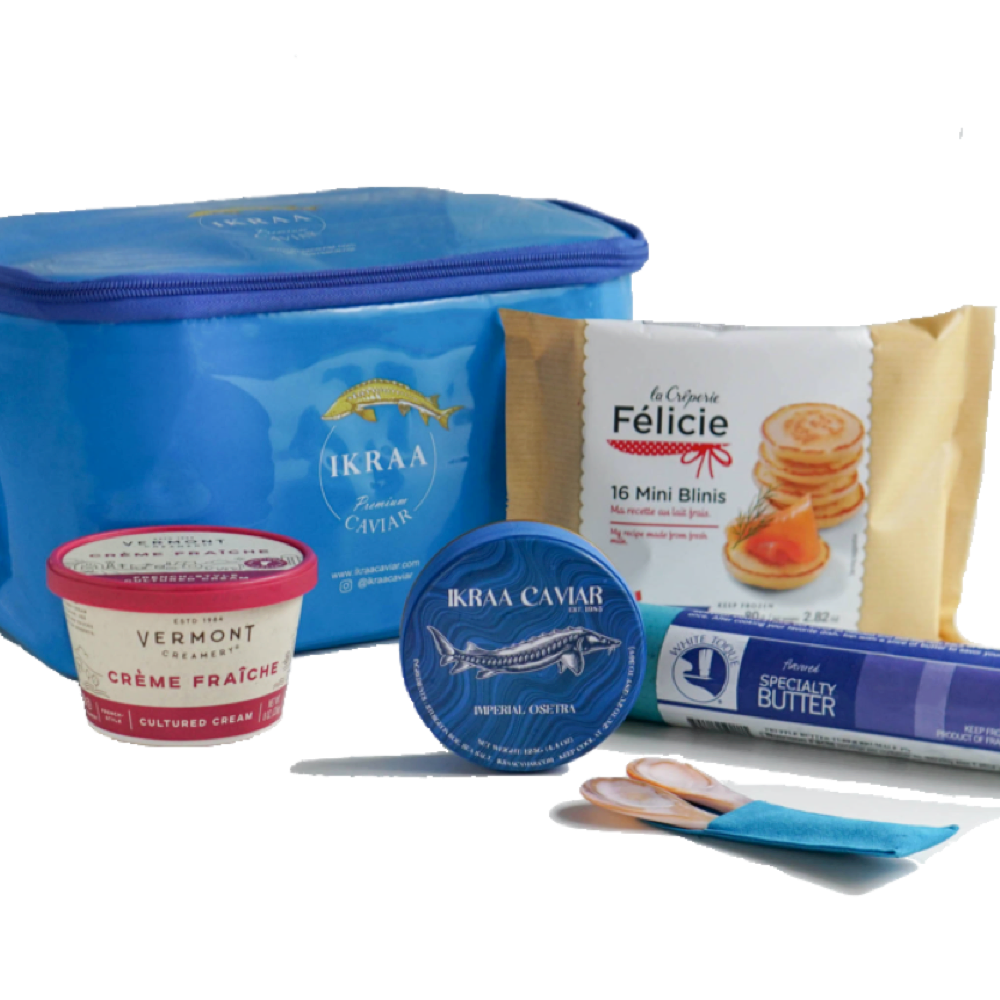
IKRAA ships all caviar in temperature-controlled, insulated coolers engineered to maintain safe temperatures for 48–72 hours. These coolers undergo thermal testing, shock testing, and pressure testing to ensure that even delicate caviar travels safely across states or across the country.
If you’ve received your shipment and plan to move your caviar again—perhaps to a dinner party, a weekend house, or a flight—simply reuse the IKRAA cooler. It already contains the correct insulation and structure, and it fits the tins securely.
Luxury foods deserve luxury packaging, and IKRAA’s transport systems are designed with both preservation and presentation in mind. Reusing them is easy, efficient, and reliable.
Flying With Caviar: Private vs. Commercial Travel
Many people assume that traveling with caviar by air is complicated, but it’s far simpler than it seems—as long as you understand the differences between private aviation and commercial airlines.
Flying on Private Jets
Private jet travel offers the most flexibility and comfort for transporting caviar. Most private flight operators accommodate perishables without issue, provided they’re packed securely. Because private jets often have catering refrigeration or chilled storage areas, passengers can even enjoy their caviar onboard, turning the flight itself into a culinary moment.
Some IKRAA clients coordinate with flight attendants ahead of time to have caviar served with Champagne immediately after takeoff. It’s a luxurious experience, but it also shows how effortlessly caviar can travel when handled thoughtfully.
Flying Commercial
Commercial flights require a bit more preparation but remain perfectly feasible. Caviar is absolutely allowed in carry-on luggage, provided it is kept cold. Gel packs are permitted as long as they are fully frozen at the time of TSA screening.
Caviar should never be placed in checked baggage. The cargo hold often reaches warm temperatures during loading and unloading, and the risk of mishandling is significantly higher.
Finally, there is one detail travelers sometimes overlook: international customs rules. Many countries allow small quantities of sturgeon caviar for personal consumption, but some have restrictions or require specific documentation. A quick check with your destination country’s customs website avoids surprises upon landing.
Traveling With Caviar by Car or Ground Transport
Caviar travels extremely well by car when packed correctly. Still, road travel introduces its own variables—heat from sunlight, warm car interiors, and longer travel times than expected due to traffic or delays.
If you're transporting caviar by car, keep these principles in mind:
-
Store the cooler in the main cabin, not the trunk.
-
Avoid placing it near heating vents or in direct sunlight.
-
If traveling for more than 3 hours, replenish gel packs or bring extras.
-
Try not to open the cooler unnecessarily—every opening releases cold air.
On short trips of one to three hours, a simple insulated lunch cooler with two gel packs is often enough. On longer road trips, a sturdier cooler maintains insulation more effectively.
Traveling by Train, Ferry, or Yacht
Caviar travels exceptionally well on yachts or ferries, where refrigeration is often available. The same is true for trains with dining or sleeper services. For situations without guaranteed cooling, a high-quality cooler is the best option.
The principle stays the same: as long as the temperature is controlled, caviar can go almost anywhere.
What To Do if Your Caviar Won’t Be Served Right Away
Sometimes plans change, dinners run late, or travel takes longer than anticipated. If you won’t be serving your caviar within 12 hours, it’s essential to refrigerate it upon arrival.
Keep the tin sealed until just before serving—an unopened tin retains freshness far better than an opened one. Inside the fridge, the coldest areas are usually the back wall or lower shelves. Try to avoid fridge doors, which warm up each time the door opens.
If you are traveling to a vacation home or hotel, request a fridge in advance or bring a portable electric mini-fridge if traveling by car. Travelers who frequently entertain on the go often keep compact fridges solely for caviar and wine.
Serving Caviar After Travel: Presentation Still Matters
Travel may be practical, but caviar service should always feel elegant. Once you’ve reached your destination and your caviar is ready to be enjoyed, allow it to sit for five to ten minutes after removing it from the refrigerator. This slight rest makes the texture smoother and enhances aromatics.
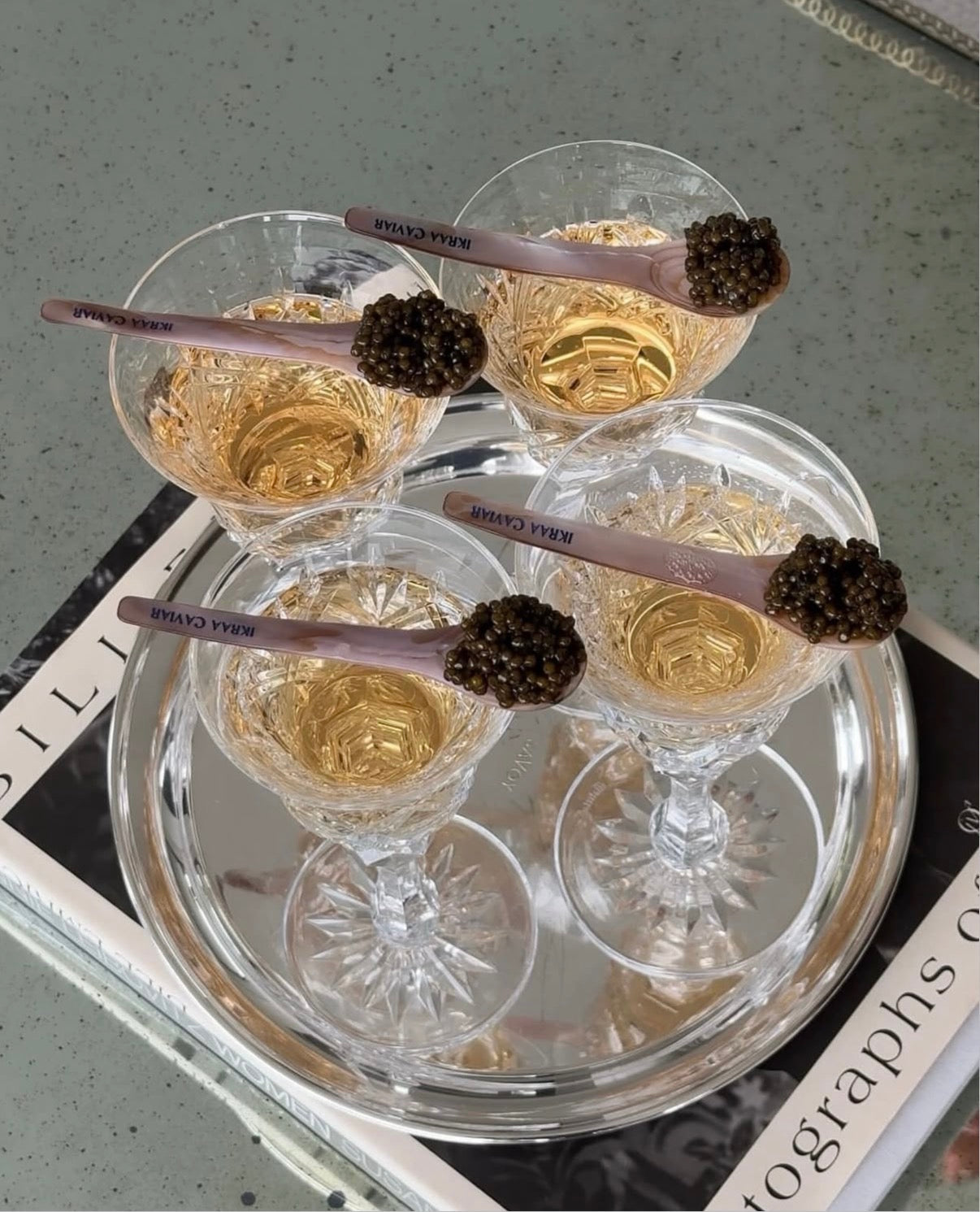
Serve it over crushed ice, and always use non-metallic spoons—mother-of-pearl, bone, or gold-plated are ideal. Stainless steel can impart metallic notes that alter flavor.
Accompaniments are optional but delightful: blinis, crème fraîche, chives, soft scrambled eggs, or simple toast points. Champagne or chilled vodka remains the classic pairing.
Even after a long journey, caviar should feel celebratory, intentional, and beautifully presented.
How Long Caviar Can Safely Travel
With proper insulation, caviar can safely travel for 24–48 hours without refrigeration, and sometimes up to 72 depending on the cooler quality and ambient temperature. IKRAA’s packaging systems fall into the 48–72 hour category under controlled conditions.
However, the safest approach is to assume 24–36 hours as a guideline when using personal coolers, especially during warm weather. Always bring extra gel packs for peace of mind.
Common Mistakes When Traveling With Caviar—and How to Avoid Them
Even experienced travelers make avoidable mistakes. Here are the most common:
-
Using ice instead of gel packs
-
Letting caviar warm up during transit
-
Storing caviar in a car trunk
-
Packing it near warm items like baked goods
-
Forgetting customs limitations
-
Opening the tin before reaching the destination
-
Using dry ice (freezes the pearls)
Avoiding these pitfalls ensures your caviar arrives tasting exactly as intended.
How Long Caviar Lasts Once You Arrive
Unopened, high-quality caviar kept at the correct temperature can last up to four weeks in the refrigerator, though IKRAA recommends consuming it sooner for the best flavor and texture.
Once opened, caviar should be enjoyed within 24–48 hours, as oxygen exposure begins to soften the pearls and diminish aroma.
This is why proper travel handling is so important—you want to preserve every bit of its perfection.
The IKRAA Philosophy of Traveling With Caviar
For IKRAA, caviar is not merely a product—it’s a cultural symbol, a luxury ingredient, and a moment of connection. Traveling with caviar means carrying flavor, craftsmanship, and tradition from one place to another. Every tin is hand-selected, graded, packed, and handled with extraordinary care.
By following these best practices, you’re honoring that same philosophy: respecting the delicacy, preserving its integrity, and ensuring that your guests or loved ones experience it exactly as it should be experienced.
Final Thoughts: Luxury Doesn’t Travel Light—But It Should Travel Well
Traveling with caviar is ultimately about preservation, presentation, and precision. From maintaining the correct temperature to choosing the right packaging and navigating air travel regulations, every detail contributes to keeping the caviar pristine. With thoughtful preparation—and especially with the support of IKRAA’s engineered packaging—your caviar can accompany you anywhere in the world, from city rooftops to ski resorts, beachfront villas, private jets, or intimate celebrations at home.
When you choose IKRAA, you’re not just transporting caviar.
You’re carrying a statement of taste, craftsmanship, and luxury—wherever your journey takes you.